San Francisco 3-Day Itinerary: The Perfect First Trip (2026)
San Francisco is one of my favourite cities in California. and honestly one of my favourite cities anywhere. I have spent more time here than almost anywhere else on the West Coast and it still surprises me on every visit. The fog rolling over the Golden Gate at sunrise, the hills that turn every walk into a workout, the neighbourhoods that each feel like a completely different city. Three days is the right amount of time for a first visit. enough to see the icons, go deep into at least two neighbourhoods, and leave wanting to come back.
This San Francisco 3-day itinerary is built from my own time here, organized to minimize backtracking so you spend your time experiencing the city rather than sitting in traffic. You can also download my San Francisco Travel Guide to help you plan your trip.
This post contains affiliate links. If you book through one of my links, I may earn a small commission at no extra cost to you.
Day 1: Golden Gate Bridge, Presidio, Fisherman’s Wharf
The first day covers the north side of the city. The Golden Gate Bridge, the Presidio, and the waterfront all cluster geographically so you never find yourself backtracking.
Battery Spencer and the Golden Gate Bridge
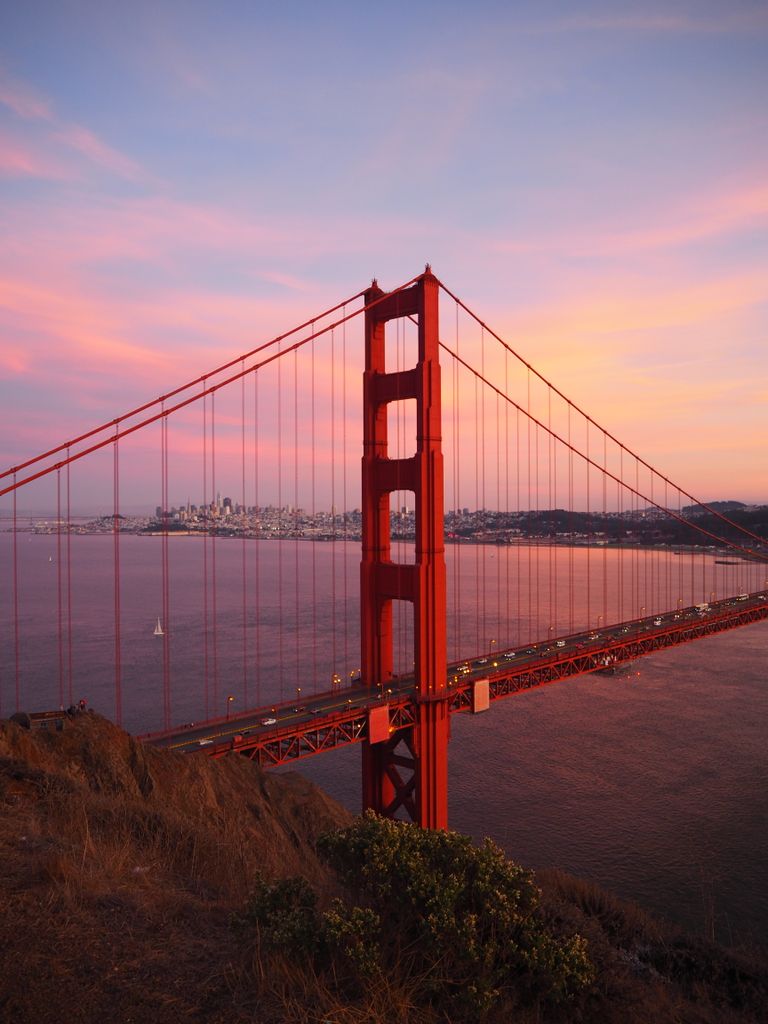
Start early. Battery Spencer in the Marin Headlands is the best Golden Gate Bridge viewpoint in the Bay Area and it fills up by 9am on weekends. Cross the bridge heading north, take the first exit at Alexander Avenue, and drive up Conzelman Road to the parking area. From there, the full span of the bridge stretches out in front of you with the Marin Headlands rolling in the foreground and the entire San Francisco skyline sitting behind. That is the composition that makes people book flights.
The light here is best at sunrise when the city is still glowing behind the bridge. However, any time before 9am gives you manageable crowds and beautiful directional light. Bring a jacket regardless of the season. the wind at Battery Spencer is consistently brutal even on warm days.
For the bridge from the water, the Golden Gate Bridge Bay Cruise from Pier 41 passes directly underneath the span. The low-angle perspective from the water is completely different from any viewpoint on land and genuinely worth doing at least once. From $38 per person.
Battery Spencer: Free. Conzelman Road, Marin Headlands.
Golden Gate Overlook (alternative SF-side viewpoint): Free. Lincoln Boulevard, Presidio.
Presidio Tunnel Tops and Palace of Fine Arts
After the bridge, drive back into the Presidio. The Presidio Tunnel Tops is a newer park built directly over the Presidio Tunnel. open grass lawns with Golden Gate Bridge views and almost no crowds compared to the main viewpoints. It is less known, which means a more relaxed experience, and the bluff views looking out over the bay are excellent on their own.
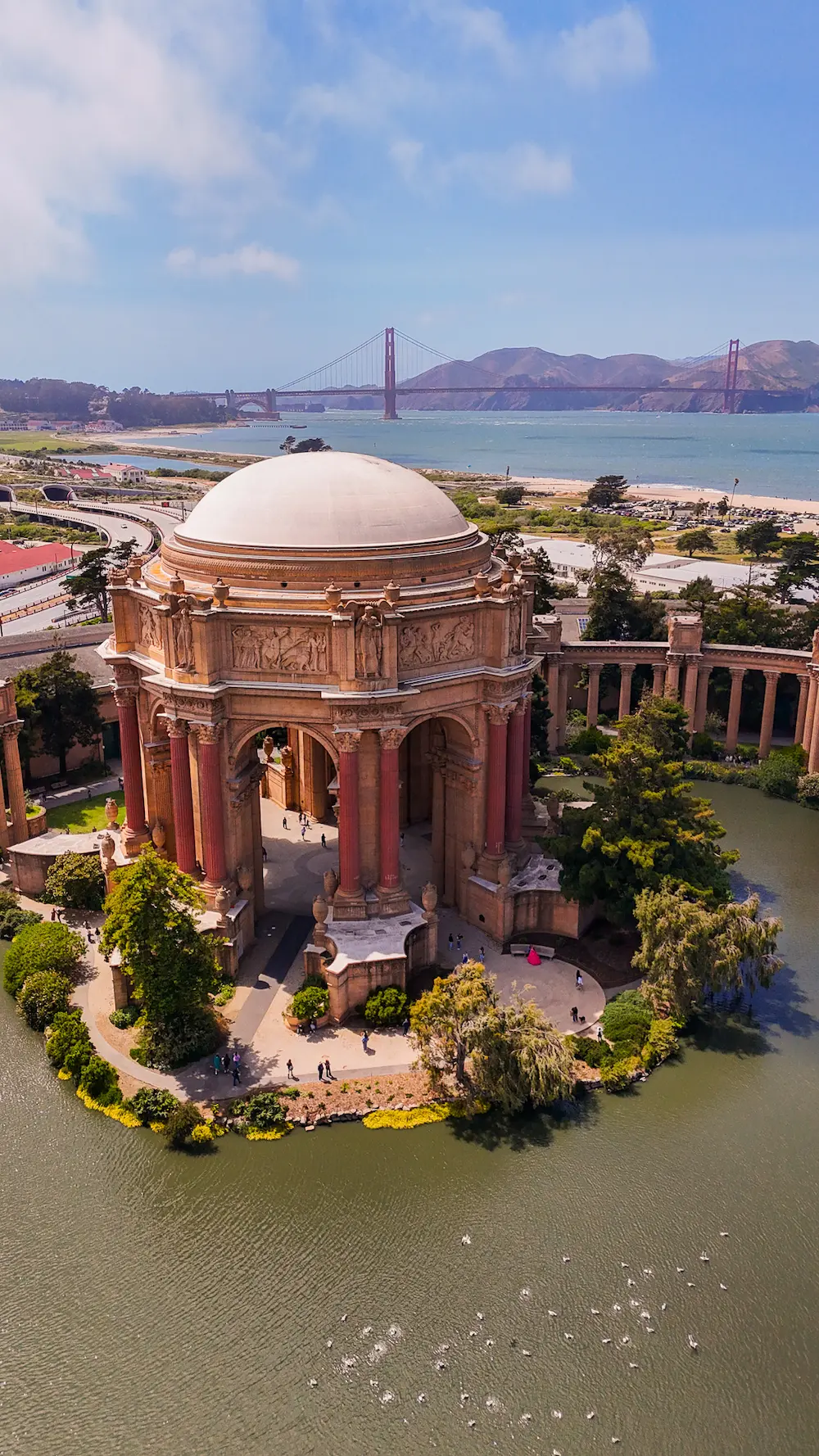
The Palace of Fine Arts is 10 minutes away. a neoclassical rotunda and lagoon originally built for the 1915 Panama-Pacific Exposition. The architecture looks like it belongs in Rome rather than a residential neighbourhood. The lagoon reflects the columns and dome perfectly in the morning when the water is still. Arrive before 9am and you often have the whole place to yourself. After that, the tour groups arrive and the moment is gone.
Presidio Tunnel Tops: Free. Long Avenue, Presidio.
Palace of Fine Arts: Free. 3601 Lyon Street.
Fisherman’s Wharf and Pier 39
Fisherman’s Wharf gets dismissed as too touristy by people who have never actually walked it properly. It is touristy, and it is also genuinely worth going. Walk to K-Dock at Pier 39 to see the sea lions. they colonised the floating docks in 1989 after the Loma Prieta earthquake and have been there ever since. Nobody invited them and nobody has managed to get rid of them, which is a very San Francisco story. Always loud, always entertaining, completely free.
Clam chowder in a sourdough bread bowl from Boudin Bakery is the right lunch here. around $14–16. Ghirardelli Square is two blocks west if you want to finish the afternoon with a hot fudge sundae at the original chocolate shop.
Alcatraz Night Tour
Book the night tour over the day tour. The day tour costs around $45–48 per person, while the night tour is around $60. However, the prison at night with fewer people and the bay dark around you is a completely different experience. The audio guide, narrated by former guards and inmates, hits differently when you are nearly the only people there.
Book the Alcatraz Night Tour at least two to three weeks ahead. it sells out consistently, and even further in advance in summer. Ferry departs from Pier 33, Embarcadero, typically around 6:15pm, returning by 9:30pm.
Night tour: ~$60 per person.
Day 2: Cable Cars, Neighbourhoods, Twin Peaks {#day-2}
Day 2 goes into the neighbourhoods. The real character of San Francisco lives in its streets rather than its landmarks.
Cable Car Ride on the Powell-Hyde Line
Start at Powell and Market Street and take the Powell-Hyde line. the most scenic of the three cable car routes. It climbs over Russian Hill, crests at a point where you can see the bay and Alcatraz spread out on one side and the city falling away on the other, then drops steeply toward Fisherman’s Wharf. The whole ride takes about 25 minutes and is one of those things that sounds like a tourist trap until you are actually on it.
$8 per ride. The Muni Visitor Day Pass is $24 and covers unlimited cable cars plus all Muni buses and streetcars. worth it if you use public transport throughout the day.
Lombard Street and Chinatown
Ride to the Lombard Street stop at Hyde and Lombard. Walk the famous crooked block from the top rather than driving it. The queue of cars waiting to drive down is always long, and walking gives you a much better view of the flower gardens on either side anyway. Takes about 10 minutes including photos.
From Lombard, walk north five minutes to Chinatown at Bush and Grant. Go through the Dragon Gate on Grant Avenue and find the Golden Gate Fortune Cookie Factory on Ross Alley. a tiny space where you can watch fortune cookies being made by hand. Free to watch, around $1 for a bag to take away. The bakeries and produce markets on Stockton Street are worth a browse if you want to see the neighbourhood as it actually lives.
Painted Ladies and Alamo Square
Take an Uber or the N-Judah Muni to Alamo Square. The Painted Ladies are six Victorian houses along Steiner Street. However, the mistake most visitors make is standing on the sidewalk directly in front of them. walk to the top of Alamo Square Park instead and look northwest. The houses sit in the lower third of your frame, the entire San Francisco skyline fills the background, and the composition finally makes sense.
Golden hour light is the best time to be here. The facades warm up in the late afternoon and the city behind catches the same golden tones. Overcast works well too, with soft even light and no harsh shadows on the white trim.
Free. Steiner Street, Hayes Valley.
Dolores Park
Dolores Park in the Mission District is 15 minutes from Alamo Square. Sit at the very top of the park, at the upper terrace near the tennis courts, and look northwest. the downtown skyline frames from this angle in a way that feels more personal than Twin Peaks. Pick up a burrito from La Taqueria (2889 Mission Street) or El Farolito (2779 Mission Street) beforehand. Both are around $12–15, both are the real thing, and both are worth choosing over anything at Fisherman’s Wharf.
Free. J-Church Muni to the park.
Twin Peaks Sunset
Twin Peaks is the best panoramic viewpoint in San Francisco. You get 360 degrees. bay, bridges, downtown, and the whole peninsula stretching south. Arrive 30–45 minutes before sunset. The city turns golden. If you have a tripod, stay for the 20 minutes after sunset when the city lights come on. that blue-grey window between sunset and full dark gives the most balanced exposure you will get.
Free. Drive up Twin Peaks Boulevard or take the 37 Muni bus.
Day 3: Golden Gate Park, Ferry Building, Lands End
Day 3 goes west. the park, the waterfront, and the coast.
Golden Gate Park
Golden Gate Park is 1,017 acres. Do not try to see all of it. Instead, pick two or three things and give them proper time.
The Japanese Tea Garden is the most photogenic spot in the park. Koi ponds, wooden bridges, pagodas, and a teahouse where you can sit with a pot of tea and pretend you have nowhere else to be. Entry is free before 10am on Monday, Wednesday, and Friday. otherwise $15. Arriving right at 9am on a free morning means you often have the whole garden to yourself before the groups arrive.
The California Academy of Sciences is one of the most interesting buildings in San Francisco. The living roof planted with native wildflowers sits on top of an aquarium, a planetarium, a tropical rainforest dome, and an African Hall with penguins. The Osher Rainforest in particular is worth the entry price alone. a glass dome you walk through at different elevations while free-flying butterflies move around you. Allow at least three hours. From $39.95, book in advance.
Alternatively, the Golden Gate Park Bike Tour covers the full park with a local guide and is the most efficient way to see everything without choosing. From $45 per person.
Ferry Building Marketplace
Take Muni to the Embarcadero and walk to the Ferry Building. This is one of the best food destinations in San Francisco. Hog Island Oyster Co. for freshly shucked oysters, Blue Bottle Coffee, Cowgirl Creamery for cheese, and around 30 other vendors. The outdoor farmers market runs Tuesday, Thursday, and Saturday on the promenade. Lunch here with Bay Bridge views is the right call.
Free to enter. 1 Ferry Building, Embarcadero.
Lands End Trail and Sutro Baths
Lands End is the stop that most tourists skip and that I take everyone to when they visit. A coastal trail runs along the cliff above the Pacific for 2.5 miles round trip, ending at the ruins of the Sutro Baths. a massive Victorian-era public swimming complex that burned down in 1966. The ruins sit right at the waterline with the ocean churning around them. They are atmospheric in fog, dramatic in sun, and genuinely quiet even in peak summer season.
The trail is flat, easy, and free. Park at Lands End Lookout or Merrie Way. both off Point Lobos Avenue.
Free. 680 Point Lobos Avenue.
Where To Eat in San Francisco
Best burritos: La Taqueria (2889 Mission Street) and El Farolito (2779 Mission Street). Both around $12–15 and both consistently excellent. Cash preferred at La Taqueria.
Best clam chowder: Boudin Bakery at Fisherman’s Wharf in a sourdough bread bowl. around $14–16. The sourdough starter here is over 150 years old.
Best oysters: Hog Island Oyster Co. at the Ferry Building. Around $18–24 for a half dozen. Additionally, Swan Oyster Depot at 1517 Polk Street does the full seafood counter experience. cash only, small, always a line, always worth it.
Best bakeries: Tartine Bakery (600 Guerrero Street) for the country bread and morning buns. Go at 5pm when the bread comes out. Arsicault Bakery (397 Arguello Boulevard) for croissants. consistently the best in the city.
Best dinner splurge: Nopa (560 Divisadero Street) or Foreign Cinema (2534 Mission Street). Both around $50–80 per person and both genuinely excellent.
Where To Stay in San Francisco
Fisherman’s Wharf is the best base for a first visit. walking distance to the Alcatraz ferry, Pier 39, and the waterfront. Hotel Zephyr is modern and well-located, from $180/night.
Nob Hill feels like classic San Francisco. The cable car lines run through here. The Fairmont San Francisco is the landmark hotel, from $250/night.
Marina and Pacific Heights is quieter and more residential. Hotel Drisco is a local institution, from $280/night.
Avoid the Tenderloin and the blocks around lower Market Street for a first visit. Always check recent reviews before booking.
Getting Around San Francisco
No car needed. San Francisco is the exception in California. a car is more of a problem here than a solution. Parking costs $30–50 per day in garages near tourist areas and car break-ins happen frequently. Leave the rental at the airport.
Muni bus and Metro: Covers the entire city. The MuniMobile app lets you buy tickets in advance. Single ride is $3. The Muni Visitor Day Passport is $24 and covers unlimited rides on all Muni lines including cable cars.
Cable cars: $8 per ride or included in the Visitor Passport. The Powell-Hyde line is the most scenic.
BART: For airport transfers only. Not needed for city sightseeing.
Walking: More of the city is walkable than it looks on a map. The hills are real but manageable if you plan routes that go with the terrain.
Best Time To Visit San Francisco
September to November is the best window. The fog thins, temperatures hit 65–75°F, and the city is far less crowded than summer. This is when San Francisco looks and feels its best.
March to May is second best. Green hills, spring flowers, mild temperatures. However, fog is still present in the mornings on most days.
June to August is peak season. the most fog, the most crowds, and paradoxically not the warmest weather. The fog locals call Karl sits over the city most summer mornings.
December to February is the quietest and cheapest. Cold and occasionally rainy, but hotels drop significantly in price.
One rule all year: bring a layer. San Francisco temperature drops fast, even in the middle of a sunny afternoon.
San Francisco 3-Day Itinerary Map
[EMBED: Google Map with all stops pinned by day]
Save this itinerary for your San Francisco trip.
More San Francisco: Best Things To Do in San Francisco · Best Photo Spots in San Francisco · Best Weekend Trips from San Francisco