20+ Best Things To Do in San Francisco (2026 Guide + Map)
I’ve spent more time in San Francisco than almost anywhere else in California, and it is still the city I get the most questions about. Where to go, what to skip, how long to stay, where to eat. It is a small city that fits in an enormous amount: seven square miles, a national park inside the city limits, Victorian architecture, and some of the best food in the country, all within walking distance of each other. Every neighborhood feels like a different city. The Mission has nothing in common with North Beach. North Beach has nothing in common with the Presidio. That is the thing about San Francisco that keeps pulling me back.
Everything in this guide is firsthand. I have been to every stop on this list, most of them more times than I can count. If something is not worth your time, it is not on this list.
Download the free San Francisco Travel Guide for the complete version with restaurant lists, detailed itineraries, and a curated Google Map.
Table of Contents
∧This post contains affiliate links. If you book through one of my links, I may earn a small commission at no extra cost to you.
San Francisco QUICK FACTS
Best time to visit
Sep – Nov & Mar – May
55°F to 75°F (13°C to 24°C)
How to get there
Fly to SFO or OAK Airport
BART to downtown ~$10, 30 min
How to get around
Muni + cable car + walking
No car needed in the city
Ideal trip length
3 days minimum
4–5 days with day trips
Cable car price
$8 per ride
Muni Day Pass $24
Must-do activities
Golden Gate Bridge Views
Alcatraz Night Tour
Painted Ladies at Golden Hour
Lands End Trail
Ferry Building Market
Restaurants
La Taqueria · Tartine Bakery
Swan Oyster Depot · Hog Island Oyster Co.
Hotels
Fairmont San Francisco
Hyatt Regency Embarcadero · Argonaut Hotel
20+ Best Things To Do in San Francisco
1. Golden Gate Bridge
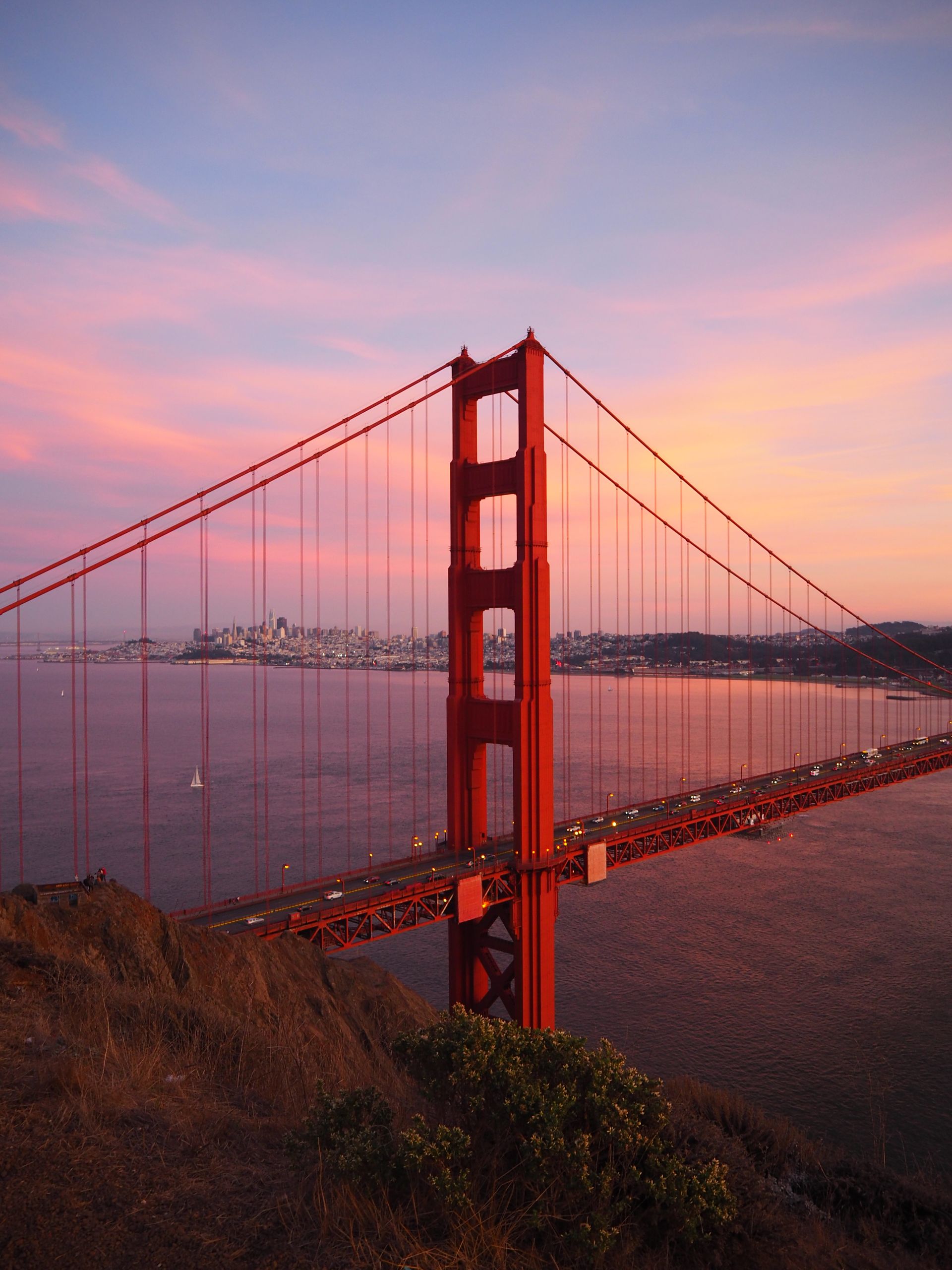
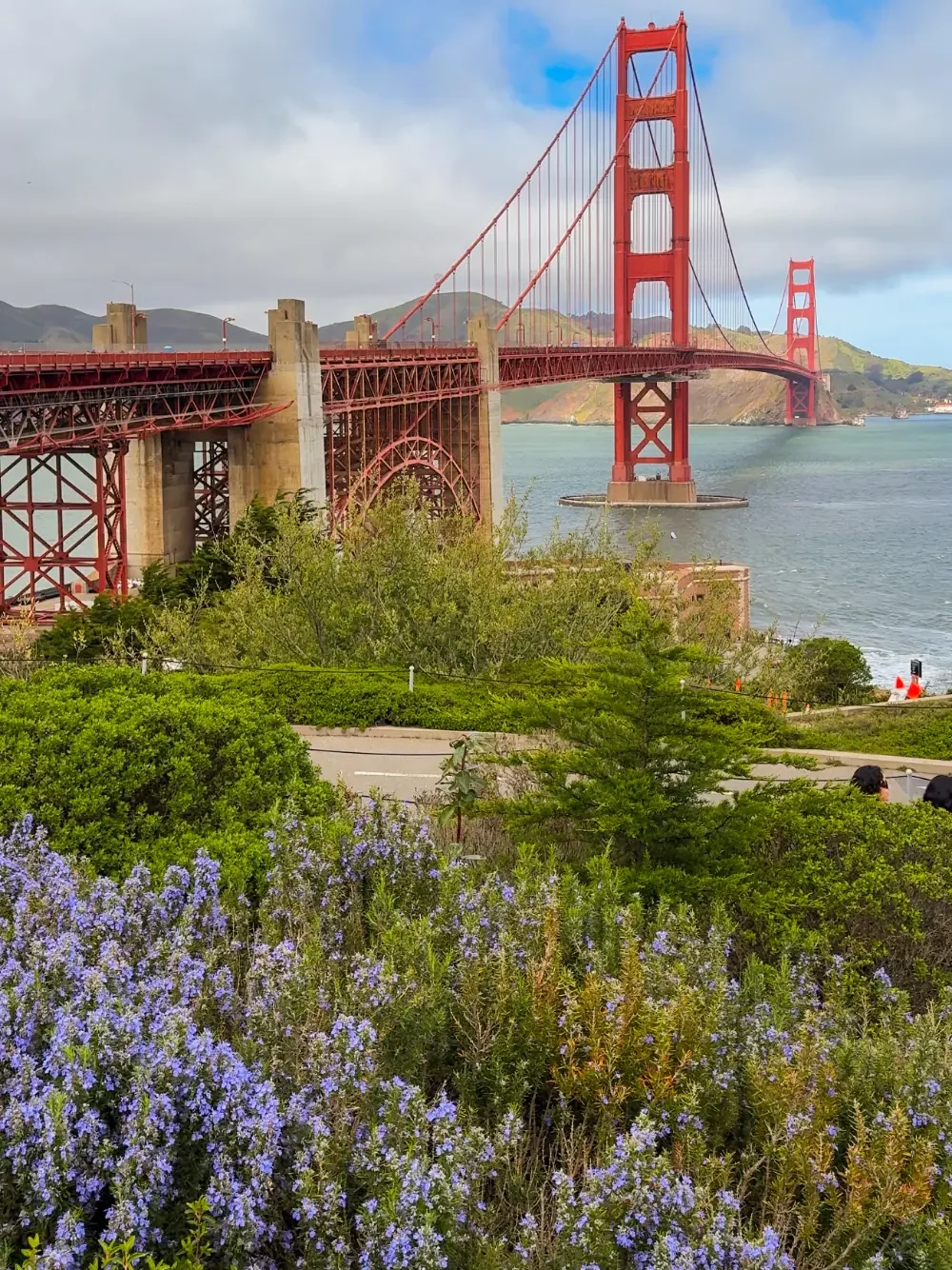
The Golden Gate Bridge is the reason most people come to San Francisco, and the viewpoint you choose makes all the difference between a good photo and the photo.
Battery Spencer in the Marin Headlands is the best viewpoint in the Bay Area, full stop. You cross the bridge heading north, take the first exit at Alexander Avenue, and drive up Conzelman Road. The full span of the bridge stretches out with the Marin Headlands in the foreground and the San Francisco skyline filling the background. I go back here every single trip. Arrive 30 minutes before sunrise and you get the city lights still on behind the bridge with the sky starting to glow, with almost nobody else there.
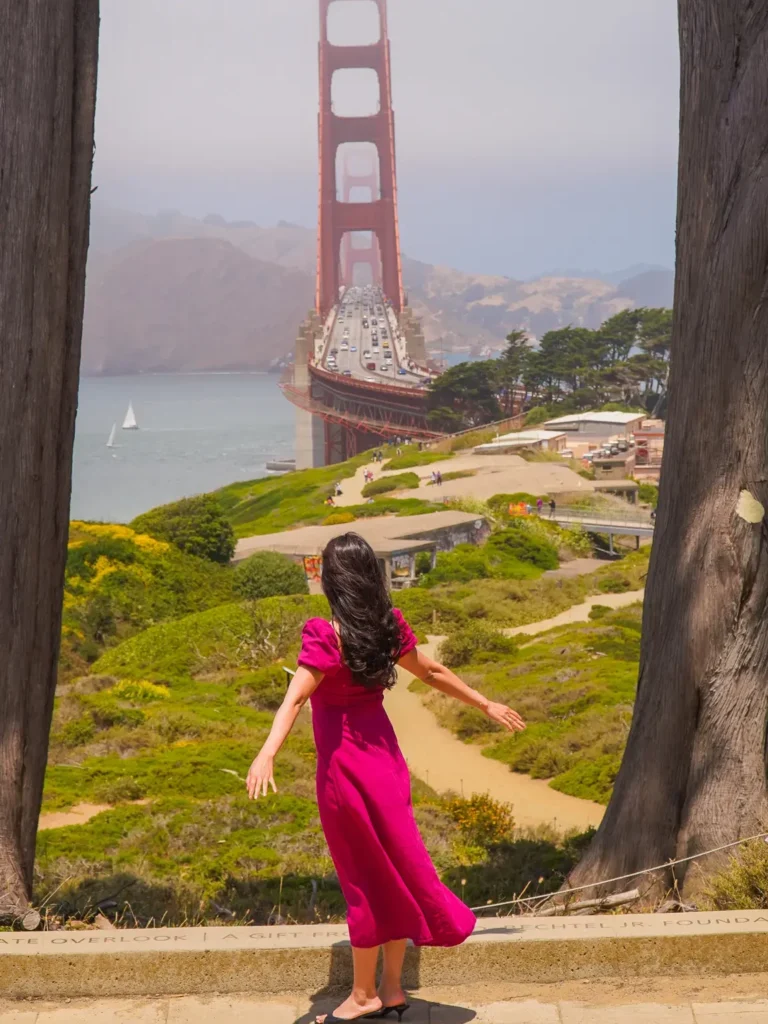
Other viewpoints worth knowing: Golden Gate Overlook in the Presidio has cypress trees framing the south tower and is a two-minute walk from free parking. Fort Point sits directly under the south anchorage where you look straight up at the bridge arch from below, a completely different angle and one most visitors never think to use. Presidio Tunnel Tops is a newer bluff park with direct bridge views and almost no crowds, even on weekends.
For the bridge from the water, Red and White Fleet (Pier 43) or Blue and Gold Fleet (Pier 39) both offer routes that pass directly underneath the bridge. From $38–95 per person depending on the tour length.
2. Alcatraz Island
Alcatraz Island is one of the few “tourist” spots that actually lives up to the hype. Located 1.5 miles offshore, this former federal prison once held some of America’s most notorious criminals, including Al Capone and “Machine Gun” Kelly. The experience is centered around the “Doing Time: The Alcatraz Cellhouse Tour”, which is narrated by former inmates and correctional officers, the clanging cell doors and personal stories make the atmosphere feel incredibly heavy.
Book the night tour over the day tour, it costs around $60 per person versus $45–48 for the day tour, but the prison at night with fewer visitors and the bay dark around the island is a completely different experience. I did the day tour first and the night tour second and they are not comparable. This is the #1 thing that sells out in SF. You must book at least 2–3 weeks in advance.
If you don’t want to deal with booking five separate tickets, this Alcatraz + Hop-On Hop-Off Bus combo, is the move. It essentially covers your transport and your biggest sightseeing cost in one shot.
3. Fisherman’s Wharf and Pier 39
Fisherman’s Wharf gets dismissed as too touristy, and it is, but it is also genuinely worth going to for one specific reason. Walk to K-Dock at Pier 39 to see the sea lions. They colonized the floating docks in 1989 after the Loma Prieta earthquake displaced them from their usual spots, and the city decided to let them stay. Hundreds of them now, always loud, always doing something worth watching, completely free.
For lunch, clam chowder in a sourdough bread bowl from Boudin Bakery is the right call. Afterward, get yourself a hot fudge sundaes at Ghirardelli Square. The original chocolate factory building is still there and the sundaes are worth the stop at least once.
4. Palace of Fine Arts
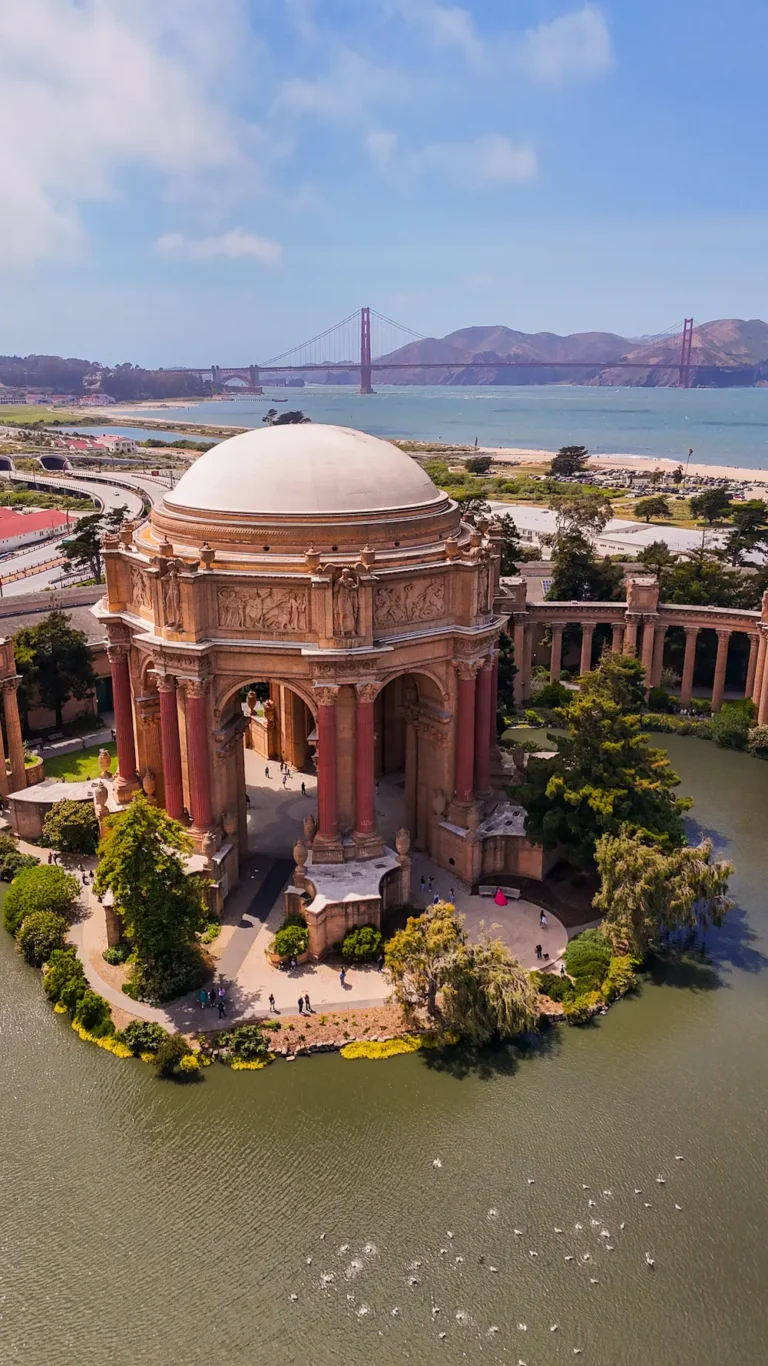
The Palace of Fine Arts is one of the most photogenic spots in San Francisco and the one that most visitors either rush past or miss entirely. A neoclassical rotunda and lagoon built for the 1915 Panama-Pacific Exposition, it looks like it belongs in Rome rather than the Marina District. The lagoon reflects the columns and dome in the morning when the water is calm, and the whole thing is completely free.
I take everyone here on their first visit to San Francisco. Go before 9am when the tour buses have not arrived yet and the light from the east hits the columns directly. That is the version of this place that makes people stop walking.
[IMAGE PLACEHOLDER: Palace of Fine Arts San Francisco rotunda lagoon morning light]
5. Ferry Building Marketplace
The Ferry Building on the Embarcadero is the ultimate food destination in San Francisco. It’s a curated collection of the city’s best: Hog Island Oyster Co. for fresh oysters at the bar, Blue Bottle Coffee for a perfect pour-over, and Cowgirl Creamery for local artisan cheese, and around 30 other vendors all under one roof. The Saturday farmers market runs on the outdoor promenade from 8am to 2pm and is where local chefs do their weekend shopping.
Eat outside on the Embarcadero with Bay Bridge views. The Saturday market is the best version of this place. Arrive early because the best stalls sell out by 10am.
6. Cable Car Ride
The cable car is both a legitimate form of transportation and a San Francisco experience that is worth doing for its own sake. Take the Powell-Hyde line, which is the most scenic route in the city. It climbs over Russian Hill, crests at a point where you can see Alcatraz and the bay spread out below, then drops steeply toward Fisherman’s Wharf with the water ahead of you the whole way down.
Buy your ticket ($8 per single ride) at the kiosk rather than the app at busy times. The kiosk is faster and you board immediately. The Muni Visitor Passport at $24 for one day covers unlimited cable car rides plus all Muni bus and streetcar routes, which makes it the better deal if you plan to use transit more than twice in a day.
[IMAGE PLACEHOLDER: Powell Hyde cable car San Francisco hill bay view Alcatraz]
7. Lombard Street
The famous one-block section of Lombard Street with eight sharp hairpin turns descending through flower gardens is worth visiting, but walk it rather than driving it. The line of cars queuing to drive down on weekends is long and slow, and walking gives you a much better look at the hydrangea gardens (during summer time) on both sides of the turns. The best angle for photos is from the very top looking down, where the turns compress into a tight frame with the bay visible at the bottom of the hill on clear days.
Go on a weekday morning before 8am if you want the street to yourself. By 10am on any weekend it is crowded at the top and the car queue starts.
8. Painted Ladies at Alamo Square
The Painted Ladies are the six Victorian houses on Steiner Street at Alamo Square that appear against the San Francisco skyline in thousands of photographs. The image is one of the most reproduced in California, and the reason it keeps working is that the composition is genuinely good. The houses sit in the lower third of the frame with the entire city skyline filling everything above them.
The mistake most people make is shooting from the sidewalk directly in front of the houses. That gives you the houses but loses the skyline. Walk across to Alamo Square Park and climb to the upper lawn. From there the houses and the full skyline both fit in one frame, with the proper foreground and background separation. Go at golden hour when the facades warm up and the city behind them catches the same light.
[IMAGE PLACEHOLDER: Painted Ladies Alamo Square San Francisco Victorian houses skyline golden hour]
9. Chinatown
San Francisco’s Chinatown is the oldest in North America, established in 1848, and one of the most densely populated urban neighborhoods in the United States. Enter through the Dragon Gate on Grant Avenue at Bush Street and walk north through the main commercial strip, full of dim sum restaurants, tea shops, herbal medicine stores, and produce markets that have been operating on the same blocks for generations.
The real version of this neighborhood is one block off the main tourist drag. Walk up Sacramento Street or Clay Street parallel to Grant Avenue and the crowds thin immediately. The Golden Gate Fortune Cookie Company on Ross Alley, a narrow alleyway off Grant, has been making fortune cookies by hand since 1962. Watch them being folded fresh from the press, buy a bag for a few dollars, and keep walking.
If you want to go deeper than just walking the main street, I highly recommend booking a guided tour. These are the two best ways to see the area: Chinatown Culinary Walking Tour for a deep dive into the neighborhood’s best food or thor Chinatown and North Beach Walking Tour to experience the cultural heart of these two iconic districts in one go.
10. Haight-Ashbury
The Haight-Ashbury neighborhood at the east end of Golden Gate Park is where the 1960s counterculture happened: the Summer of Love, the Grateful Dead’s house at 710 Ashbury, Janis Joplin around the corner, and the specific energy of a moment that changed American culture. The Victorian houses are still there. The independent shops on Haight Street are still there. The neighborhood still has a character that feels nothing like the rest of the city.
Walk the four blocks of Upper Haight between Masonic Avenue and Stanyan Street. Amoeba Music at 1855 Haight Street is one of the largest independent record stores in the country. Magnolia Brewing on the corner of Haight and Masonic has been brewing California ales in the neighborhood since 1997 and is the right place for a late afternoon beer.
11. Twin Peaks
Twin Peaks gives you the best 360-degree view of San Francisco, with downtown to the east, Ocean Beach to the west, the bay and both bridges to the north, the Peninsula running south. The view at sunset is excellent. The 20 minutes just after sunset, when the city lights come on while the sky is still lit, is the shot that makes the trip worthwhile.
Bring a layer. The wind at Twin Peaks is strong even on warm days, and after sunset the temperature drops fast. The small summit parking lot fills up one hour before sunset on weekends, so arrive early or Uber up.
[IMAGE PLACEHOLDER: Twin Peaks San Francisco 360 panoramic view city bay bridges sunset]
12. Golden Gate Park
Golden Gate Park is larger than Central Park in New York and one of the best urban parks in the United States. The park runs 3 miles from the Panhandle to Ocean Beach and contains more things worth visiting than most cities have in their entirety.
The Japanese Tea Garden is the oldest public Japanese garden in the United States, established in 1894. The cherry trees, stone lanterns, drum bridge, and koi pond make it one of the most photographed spots inside the park. Entry is $16 for adults, $7 for seniors/youth, free before 10am on Monday, Wednesday, and Friday.
The de Young Museum houses the city’s primary fine arts collection, covering American art from the 17th to 21st century, international contemporary work, and a textile collection that is genuinely exceptional. The observation tower is free with admission and gives a 360-degree view over the park and the city. $20 general admission.
The California Academy of Sciences across the Music Concourse from the de Young has a living rainforest dome, a planetarium, an aquarium, and a living roof with native plant gardens. The best science museum in San Francisco and one of the best in the country. Ticket from $59 per adult, book ahead on weekends.
Stow Lake in the middle of the park rents rowboats and pedal boats by the hour. One of the most relaxing 45 minutes available in the city, and almost nobody visiting San Francisco for the first time ever does it.
[IMAGE PLACEHOLDER: Japanese Tea Garden Golden Gate Park San Francisco koi pond wooden bridge morning]
13. SFMOMA
The San Francisco Museum of Modern Art is one of the best modern art museums in the United States. The permanent collection includes major works by Frida Kahlo, Jackson Pollock, Diego Rivera, and an exceptional photography collection that is one of the strongest anywhere. The 10-story expansion opened in 2016 with a living wall on the facade and is worth seeing from the outside even before you go in.
The first two floors of the permanent collection are free on certain days. Check their website before visiting. General admission is $30 for adults, with free admission for visitors under 25.
[IMAGE PLACEHOLDER: SFMOMA San Francisco Museum of Modern Art exterior interior gallery]
14. California Academy of Sciences
The California Academy of Sciences in Golden Gate Park is one of the most interesting buildings in San Francisco, and one of the few places where you can genuinely spend a full day without running out of things to see. The living roof planted with native wildflowers sits on top of an aquarium, a planetarium, a tropical rainforest dome, and an African Hall with African penguins. The Osher Rainforest in particular is worth the entry price alone, a glass dome you walk through at different elevations while free-flying butterflies move around you. Allow at least three hours. You can get your ticket here.
15. Exploratorium
The Exploratorium on Pier 15 is a science museum built entirely around hands-on experimentation, with 650 interactive exhibits covering perception, physics, biology, and human behavior. It sounds like a children’s museum and works just as well for adults. The Tinkering Studio, where visitors build and experiment with materials, is the most interesting section. You can book your ticket here. After 6pm on Thursday evenings the museum runs an adults-only version with a bar.
16. Lands End Trail and Sutro Baths
The Lands End trail runs 1.25 miles along the coastal bluffs of the northwest corner of San Francisco, ending at the ruins of the Sutro Baths, a massive Victorian-era public bathhouse complex built in 1896 that burned down in 1966, leaving concrete ruins right at the waterline with the Pacific moving around them.
I come here when the fog is heavy and most photographers are waiting for it to clear somewhere else. The ruins in thick fog with the waves breaking around the walls is one of the most atmospheric places in the city, and on those mornings you often have it nearly to yourself. On clear days the ruins and the coastal bluffs trail are simply one of the best easy walks in San Francisco.
[IMAGE PLACEHOLDER: Sutro Baths ruins Lands End San Francisco coastal trail ocean fog]
17. Baker Beach
Baker Beach gives you the Golden Gate Bridge from beach level, with the full span above and the water in the foreground. The north end of the beach gets you closest to the south tower. Walk as far north as the beach allows before the rocks cut you off. The best light is in the morning when the sun comes from the east and hits the bridge face-on. Baker Beach is clothing-optional on the north end near the rocks. Worth knowing before you go.
Note: Baker Beach and the adjacent Marshall’s Beach are clothing-optional beyond the main beach area.
18. Ocean Beach
Ocean Beach is 3.5 miles of wide, undeveloped beach along the western edge of the city. It is not a swimming beach. The current is strong and the water is cold year-round. It is a walking beach, a surfing beach, and the place where San Francisco goes to watch the sun set into the Pacific. The view from the western end of Golden Gate Park looking west at the sunset is one of the most reliably good sunset views in the city.
19. Coit Tower
Coit Tower on Telegraph Hill is a 210-foot concrete tower built in 1933 with a collection of Depression-era murals inside depicting California life: workers, farms, cities, and the politics of the time. The murals alone are worth the walk up the hill.
The Filbert Steps on the east side of Telegraph Hill are the most beautiful approach. Wooden staircases descend through private gardens where wild parrots nest in the cypress trees, with Bay Bridge views appearing between the houses as you climb. Walk up the Filbert Steps from the Embarcadero, visit the tower, and walk back down via the Greenwich Steps on the north side. If you short in time, Coit Tower and Little Italy Walking tour is the perfect way to see both the murals and the neighborhood’s highlights in one go.
[IMAGE PLACEHOLDER: Coit Tower North Beach San Francisco Telegraph Hill murals view]
20. Lyon Street Steps
The Lyon Street Steps in Pacific Heights are one of the spots in San Francisco that most first-time visitors never find, and one of the ones I recommend most consistently. A formal staircase descends through manicured garden terraces with a direct view of the Palace of Fine Arts, the bay, Alcatraz, and the Marin Headlands at the bottom of the steps. At the top, the steps open onto Broadway with the view stretching north across the bay.
Go at golden hour when the light comes from the west and hits the gardens and the bay view together. The steps face west, which means the subject is front-lit in the afternoon, which is the right time for photos.
[IMAGE PLACEHOLDER: Lyon Street Steps San Francisco Pacific Heights gardens bay view Alcatraz]
21. 16th Avenue Tiled Steps
The 16th Avenue Tiled Steps in the Inner Sunset are a mosaic staircase with 163 hand-tiled steps featuring an ocean-to-sky design built by neighborhood volunteers over two years. At the top, the steps connect to Grand View Park with panoramic views of the Sunset District and the ocean to the west. You can book a Hidden Stairways of San Francisco tour, which is a 2-hour guided walk through the Inner Sunset and Golden Gate Heights. It’s the best way to see the mosaic steps and secret gardens while getting 360-degree views of the city that most tourists completely miss.
[IMAGE PLACEHOLDER: 16th Avenue Tiled Steps San Francisco mosaic staircase colorful Inner Sunset]
22. Ghirardelli Square
Ghirardelli Square is more than just a chocolate factory turned shopping hub; it’s a piece of San Francisco history that actually lives up to the hype. While it’s been a waterfront complex since 1962, the original red-brick factory vibes remain.
Head to the original chocolate shop for a World-Famous Hot Fudge Sundae. It’s one of the few “tourist” treats in the city that is genuinely worth the wait. Grab yours to go and walk over to the aquatic park bleachers for a view of the bay while you eat.
23. Dolores Park
Dolores Park is essentially San Francisco’s outdoor living room. To get the quintessential shot, head to the upper terrace near the tennis courts. From here, the downtown skyline rises perfectly above the Mission District rooftops, with the bay shimmering in the distance on clear days.
Grab a legendary burrito from La Taqueria or El Farolito first. On a sunny weekend, the park is a beautiful, chaotic mix of every subculture in the city—it’s the best people-watching spot in Northern California, hands down.
[IMAGE PLACEHOLDER: Dolores Park Mission District San Francisco skyline view sunny day picnic]
24. The Embarcadero at Sunrise
The Embarcadero waterfront from the Ferry Building north to Pier 39 at sunrise is one of the best early morning walks in the city. The Bay Bridge lights are still on, the waterfront is completely empty, and the morning light on the water is exceptional. If it rained the night before, the wet cobblestone plaza in front of the Ferry Building reflects the clock tower and the Bay Bridge, making it one of the best photo opportunities available in San Francisco and one that almost no one takes because it requires being there at 6am.
The window is about 20 minutes around sunrise before the light changes and the commuters arrive. That is exactly why the photos look like nobody else was there.
25. Fort Mason and the Marina Green
Fort Mason is a former military post on the waterfront between Fisherman’s Wharf and the Marina District that is now a center for arts and culture. The Great Meadow above the piers has direct views of the Golden Gate Bridge and the bay, and the piers themselves house some of the best restaurants and event spaces in the city.
The Marina Green extends east from Fort Mason along the waterfront, a grassy path with unobstructed bay views, kite flyers, joggers, and the best ground-level Golden Gate Bridge view from inside the city. Walk the full length from the St. Francis Yacht Club to Fort Mason and back for the best version of the San Francisco waterfront that most visitors never see.
Best Restaurants in San Francisco
San Francisco has one of the best food cities in the country, and the best meals here are not at the tourist-facing restaurants near Fisherman’s Wharf.
Mission burritos: La Taqueria at 2889 Mission Street and El Farolito at 2779 Mission Street. Both cash-preferred, both around $12–15, and both the real version of the Mission-style burrito, which was invented in this neighborhood.
Dim sum: Good Mong Kok at 1039 Stockton Street in Chinatown. Cash only, $2–5 per item, no frills, and consistently the best value dim sum in the city. Dragon Beaux in the Richmond District for a higher-end experience, around $20–35 per person.
Ramen: Mensho Tokyo at 672 Geary Street and Marufuku at 1581 Webster Street in Japantown. Both around $18–22 per bowl, both have lines, both worth the wait.
Bakeries: Tartine Bakery at 600 Guerrero Street in the Mission. Go at 8am to avoid the afternoon line. Arsicault Bakery at 397 Arguello Boulevard in the Inner Richmond for croissants that are worth the detour. Both around $5–12 per item.
Oysters: Swan Oyster Depot at 1517 Polk Street in Nob Hill. Cash only, oyster counter seating, and the best raw bar in the city. Around $25–35. Hog Island Oyster at the Ferry Building for the same quality with easier access.
Pizza: Tony’s Pizza Napoletana at 1570 Stockton Street in North Beach. One of the most awarded pizza restaurants in the United States. $18–25 per pizza.
Dinner: Nopa at 560 Divisadero Street and Foreign Cinema at 2534 Mission Street. Both around $50–80 per person, both consistently excellent, both worth booking ahead.
Best Hotels in San Francisco
Where you stay in San Francisco matters because the neighborhoods are very different from each other. Choose based on what you plan to do most.
Fisherman’s Wharf is the best base for a first visit. Walking distance to Pier 39, the Alcatraz ferry, and the waterfront. Hotel Zephyr and the Argonaut Hotel are both solid options in the $200–350 range.
Nob Hill is the most classic San Francisco location. The Fairmont from $300 per night, the Ritz-Carlton from $400, and the Huntington Hotel from $250. The cable car lines run directly through the neighborhood.
Marina and Pacific Heights are residential, quieter, and have excellent restaurants on Chestnut Street. Hotel Drisco from $280 per night is a local institution and consistently one of the best small hotels in the city.
Embarcadero puts you right on the waterfront near the Ferry Building with easy BART access. Hyatt Regency and Hotel Vitale are both good options from $250 per night.
Budget options: Club Quarters downtown from around $130–150 per night, Hotel Zelos near Union Square from $150–180, and Comfort Inn Fisherman’s Wharf from around $130–160.
One important note: avoid the Tenderloin and lower Market Street area for a first visit. Always check recent reviews before booking anywhere in that corridor.
[AFFILIATE LINK: Search hotels in San Francisco]
Best Time To Visit San Francisco
September to November is the best window. The fog clears, temperatures reach their annual peak at 65–75°F, and the crowds thin significantly after Labor Day. The city is at its most photogenic and most comfortable during this stretch.
March to May is the second-best time. The hills are green from winter rains, the spring flowers are at their best in Golden Gate Park and the Botanical Garden, and the temperatures are mild. Morning fog is common but usually clears by noon.
June to August is peak tourist season and peak fog season simultaneously. Karl the Fog, the city’s famous marine layer, sits over San Francisco most summer mornings. Bring layers regardless of what the forecast says, because San Francisco in August at 60°F with fog feels nothing like the rest of California.
December to February is the quietest and cheapest period. Cold, occasionally rainy, and the city has a different energy that is genuinely worth experiencing if you have flexibility on timing.
One rule that applies all year: always bring a layer. The temperature in San Francisco drops fast, even in the middle of a sunny afternoon, and the fog can roll in from the ocean in under 20 minutes.
Getting Around San Francisco
No car needed. San Francisco is one of the few California cities where having a car creates more problems than it solves. Parking is expensive, hills are steep, and Muni covers everything in this guide.
Muni bus and Metro covers the entire city. Download the MuniMobile app and buy tickets before you board. Single ride: $3. Muni Visitor Passport: $24 for one day, $36 for three days, with unlimited rides on all Muni lines including cable cars.
Cable car: $8 per single ride or included in the Visitor Passport. Powell-Hyde line is the most scenic. Powell-Mason is slightly less crowded. California Street line is the one locals actually use.
BART is for airport transfers from SFO and OAK. You do not need it for sightseeing within the city.
Walking covers more than most visitors expect. Fisherman’s Wharf to Coit Tower to Chinatown is a walkable loop. The waterfront from the Ferry Building to Pier 39 is flat and easy. The neighborhoods are dense enough that walking between stops in the same area is often faster than waiting for a bus.
If you drive: Use SpotHero or ParkWhiz to book parking in advance. Expect $30–50 per day near tourist areas. Never leave anything visible in your car, anywhere in the city.
SAN FRANCISCO FAQs
How many days should I spend in San Francisco?
Plan for 5 days to fully explore the major attractions — the Golden Gate Bridge, Alcatraz, and the neighborhoods — with time left for day trips to Muir Woods, Napa Valley, or Big Sur. However, if you are tight on time, 3 days covers the city highlights comfortably.
When is the best time to visit San Francisco?
September to November is the sweet spot. The weather is clear and pleasant, the fog is less frequent, and the summer crowds have thinned out considerably. Spring (March to May) is also a great option, temperatures are mild and the parks are full of flowers. The one season I would avoid is June-July, when the marine layer sits over the city most mornings and the Golden Gate Bridge disappears into fog by 9am.
Should I rent a car or use public transportation?
For getting around the city itself, you do not need a car. Muni buses, streetcars, cable cars, and BART cover everything, and parking is both expensive and genuinely difficult to find. However, if you are planning day trips outside the city — Muir Woods, Big Sur, Napa Valley — then renting a car for those specific days makes sense. Just pick it up on the morning you leave and return it when you get back.
Is San Francisco safe for tourists?
Generally yes, though there are a few things worth knowing before you arrive. Car break-ins happen frequently, so never leave anything visible in a parked car — not a bag, not a jacket, nothing. Some areas are worth avoiding at night, particularly the Tenderloin and parts of SoMa near Market Street. That said, I create content here regularly on my own using public transport and feel completely comfortable.
What are the best areas to stay in San Francisco?
The neighbourhoods I recommend most are Nob Hill, the Marina District, and Fisherman’s Wharf. All three are walkable, well-connected by public transport, and close to the main attractions. If you are particularly concerned about the city’s homelessness situation, those areas are your safest bets. The Tenderloin and parts of downtown near Market Street are cheaper for a reason — I would skip them.
Do I need to book Alcatraz in advance?
Yes, and do not leave it too late. The night tour costs around $60 per person (the day tour is $45–48), but honestly the extra cost is worth it. The prison at night with fewer people and the bay dark around you is a completely different experience from the daytime version. Book at alcatrazcitycruises.com at least two weeks ahead, and even earlier if you are visiting in summer.
San Francisco Map
[EMBED: Google Map with all 23 stops pinned by geographic cluster]
If you want the full version with restaurant recommendations, day trip ideas, and more. download the free San Francisco Travel Guide.
More San Francisco: San Francisco 3-Day Itinerary · Best Photo Spots in San Francisco · Best Weekend Trips from San Francisco